
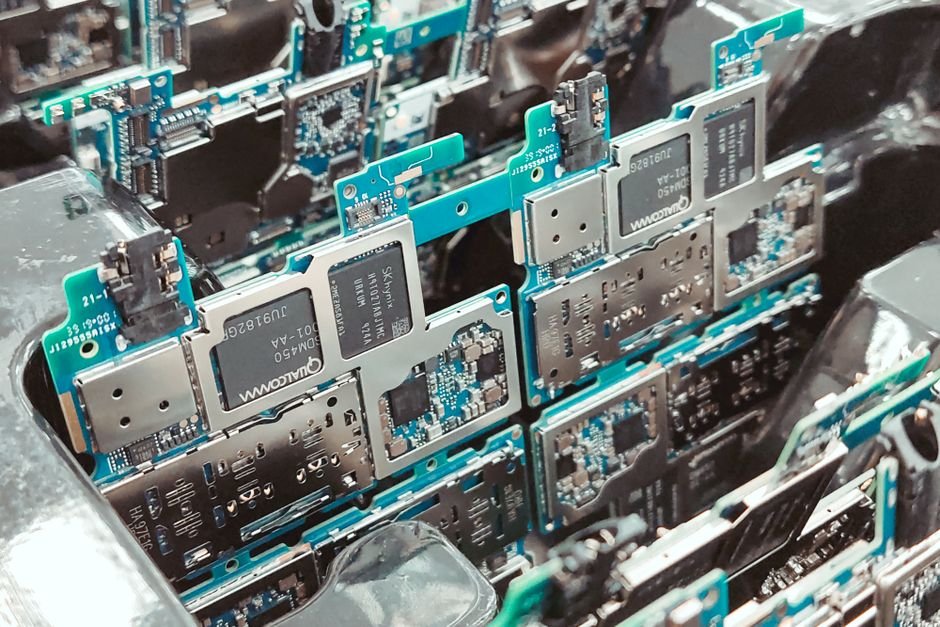

The race to put serious artificial intelligence power in your pocket just got real. Qualcomm’s latest processor announcements signal a fundamental shift in how smartphones will handle AI workloads—moving computation away from cloud servers and onto the device itself. This isn’t just incremental optimization; it’s a structural change that could redefine what we expect from our phones.
The two new chips represent Qualcomm’s aggressive push into what the industry is increasingly recognizing as the future of mobile computing: local AI inference. Rather than shipping your data to the cloud to process through powerful models, these processors can run substantial AI models directly on your device. The company specifically highlighted that its top-tier chip can execute 30-billion parameter mixture-of-experts models without breaking a sweat—or draining your battery into the ground.
Why On-Device AI Matters Now
The implications here extend far beyond raw computational bragging rights. This technology news represents a convergence of three industry trends: growing privacy concerns around cloud processing, improving neural network efficiency through pruning and quantization, and users demanding faster, more responsive AI features in apps. When your AI model runs locally, your personal data stays on your device. Your search queries, health information, financial data, and conversation history never touch someone else’s servers.
From a practical standpoint, on-device inference also eliminates network latency. Cloud-based AI requires a round trip across the internet, which introduces delays of hundreds of milliseconds. Local models respond instantly. For interactive applications like real-time translation, voice assistants, or image analysis, that difference between immediate and slightly-delayed feedback profoundly changes user experience.
What This Product Launch Means for Developers
This product launch opens new possibilities for app developers and enterprise software architects. Previously, deploying advanced AI features meant relying on API calls to services like OpenAI, Anthropic, or proprietary cloud infrastructure. That introduced costs per request, rate limiting, and dependency on external services. With 30-billion parameter models running locally, developers can embed sophisticated language understanding, image recognition, and reasoning capabilities directly into their applications.
The mixture-of-experts architecture is particularly clever here. These models use specialized sub-networks that activate selectively based on input, reducing computation compared to standard dense models of equivalent capability. This efficiency-first design philosophy suggests Qualcomm spent serious engineering effort ensuring these capabilities don’t require premium power management or compromise battery life—concerns that have historically limited mobile AI adoption.
Industry Trends Accelerating This Shift
Qualcomm’s move doesn’t happen in isolation. This aligns with broader industry trends pushing computing capability to the edge. Apple’s Neural Engine in their custom chips, Google’s Tensor processors, and even traditional Samsung processors now dedicate silicon specifically to machine learning tasks. The technology news cycle increasingly covers on-device AI as a competitive differentiator rather than a novelty feature.
Regulatory pressure also fuels this transition. Privacy laws like GDPR and emerging AI governance frameworks make processing data locally more attractive to both users and companies concerned about compliance obligations. When you can offer equivalent or superior functionality while keeping user data local, you’ve solved a genuine business and ethical problem simultaneously.
Key takeaway: Qualcomm’s dual-chip announcement represents an inflection point where on-device AI moves from experimental to practical for mainstream applications. Developers, device manufacturers, and enterprises should start planning how to leverage these capabilities. The next generation of smartphone AI won’t depend on cloud connectivity, and that changes everything about how we design privacy-conscious, responsive applications.
The question now becomes: which mobile-first developers and companies will be first to meaningfully exploit this new hardware capability, and how will it reshape user expectations around AI features in everyday applications?
Get Tech Savvy Digest in your inbox
IT news, cybersecurity, and crypto — the signal, not the noise. No spam, unsubscribe anytime.