
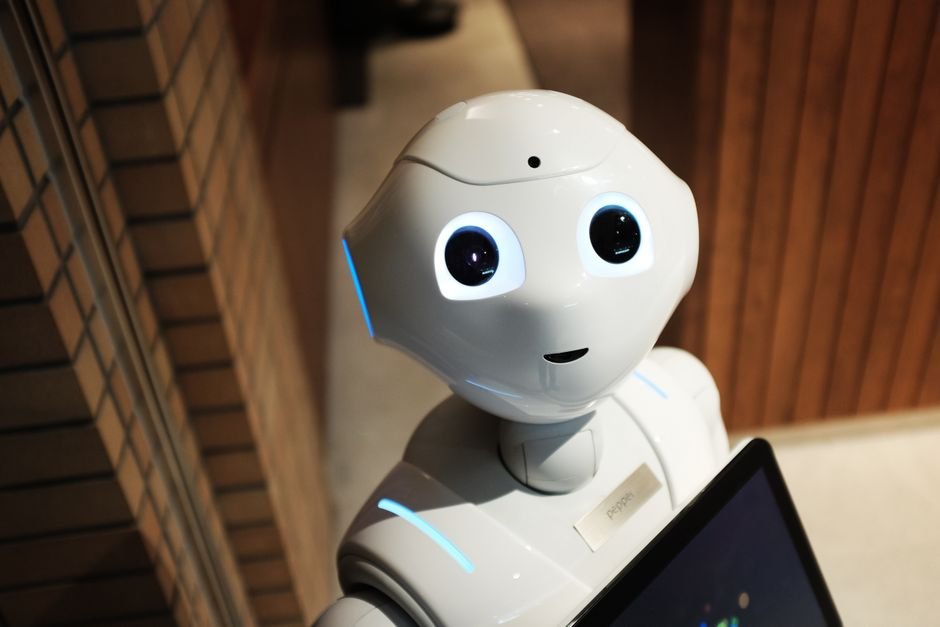

Public fear of autonomous robots isn’t irrational—it’s a legitimate barrier to adoption that could slow the entire industry. Safeworld is betting big that the solution isn’t better marketing, but better proof. The startup is building a novel approach to AI robot safety by deploying digital humans into simulated environments, essentially stress-testing the behaviors of physical robots before they interact with actual people. If they pull it off, this could fundamentally reshape how we validate autonomous systems.
The fundamental challenge here is one of trust. Despite massive advances in robotic hardware and generative AI, consumers and enterprises alike remain skeptical about whether these machines will behave predictably in real-world scenarios. Product launch announcements from robot makers get met with cautious optimism at best, outright skepticism at worst. Safeworld is tackling this by creating a testbed where digital replicas of humans can interact with AI robots in countless scenarios, helping identify edge cases and failure modes before deployment.
Why Digital Humans Matter for Robot Validation
Traditional robot testing relies on controlled lab environments and predetermined test cases. But real life is messy. A robot trained to navigate a warehouse performs fine in ideal conditions but struggles with a child running across its path, a spill on the floor, or an elderly person moving slowly. Digital humans can model countless unpredictable human behaviors—hesitation, sudden movements, fatigue, distraction—allowing robots to encounter and learn from scenarios that would be both time-consuming and ethically fraught to test with actual people.
This technology news story matters because it represents a shift from reactive safety measures to proactive validation. Instead of waiting for accidents to reveal flaws, Safeworld’s approach creates a synthetic testing ground where robots can fail safely, repeatedly, and at scale. The startup can simulate millions of human-robot interactions and use the results to identify which AI robot safety protocols actually work and which need refinement.
The Industry Trends Pushing AI Safety Solutions
We’re seeing a convergence of pressures that make Safeworld’s timing strategic. First, regulatory bodies are beginning to demand safety evidence from robot manufacturers—not just promises, but data. Second, the deployment of collaborative robots in factories, hospitals, and homes is accelerating, and each incident gets amplified on social media, further eroding public confidence. Third, insurance companies are asking tough questions about liability before insuring autonomous systems in public-facing roles.
These industry trends signal that the market is ready for a credible validation layer. Safeworld’s product launch arrives at a moment when safety certification could become a competitive advantage rather than a compliance checkbox. Companies that can demonstrate rigorous testing through digital simulation will earn faster regulatory approval and customer confidence.
Building Confidence Through Transparency and Evidence
The real genius of Safeworld’s approach is that it generates concrete, reproducible evidence. When a robot manufacturer can say, ‘This system was tested against 10 million simulated human scenarios and failed safely in all edge cases,’ that’s far more compelling than marketing language. This transparency addresses the core problem: people don’t trust robots because they don’t understand how they’ll behave under stress.
Digital humans also enable continuous iteration. Unlike physical testing, which is expensive and time-consuming, simulated environments allow engineers to rapidly test how AI robots respond to feedback and retraining. This creates a feedback loop where every incident becomes a learning opportunity, and improvements can be validated before reaching production systems. The scalability of this approach means safety validation becomes proportional to development speed rather than a bottleneck.
Key takeaway: Safeworld is addressing one of the most underrated obstacles to robot adoption—not technical capability, but human confidence. By building digital humans that can thoroughly test AI robot safety in simulation, they’re creating an evidence trail that regulators, insurers, and customers can actually verify. This could accelerate mainstream robot deployment by years, simply by proving these machines won’t hurt people.
The real question isn’t whether robots are safe in theory—it’s whether we can build the institutional trust necessary for widespread deployment. As technology news continues to highlight autonomous systems in everyday environments, the companies that solve the validation problem could become as essential to robotics as firmware is to smartphones. Do you think simulated testing will actually convince skeptics, or does the public need to see something else entirely?
Get Tech Savvy Digest in your inbox
IT news, cybersecurity, and crypto — the signal, not the noise. No spam, unsubscribe anytime.