
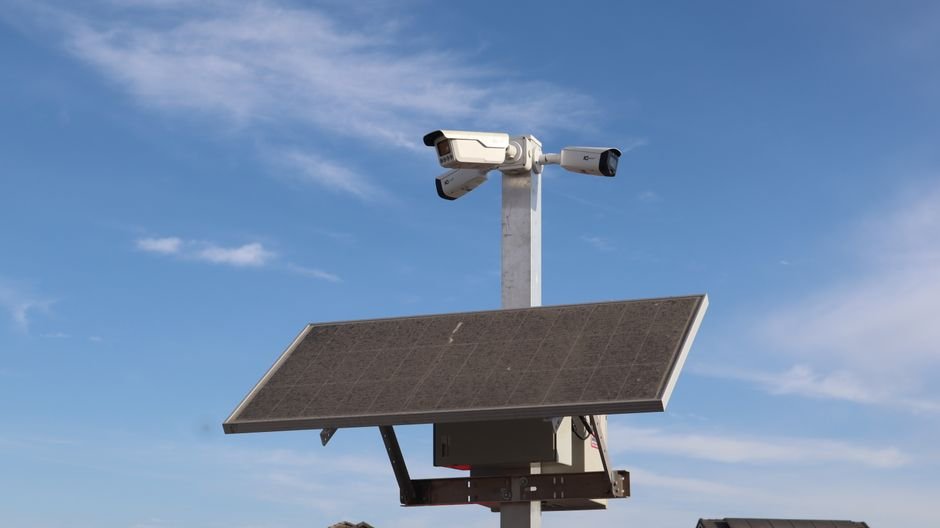

When a federal judge describes your surveillance technology as ‘indiscriminate mass surveillance,’ you know your business model just hit a significant legal snag. That’s exactly what happened to Flock Safety, the company behind the controversial automated license plate reader (ALPR) cameras increasingly deployed across American neighborhoods. The ruling signals that courts are finally pushing back against the sprawl of mass surveillance infrastructure that’s become normalized in recent years.
The case centers on a straightforward Fourth Amendment violation: a sheriff’s deputy used Flock’s system to search for a woman’s license plate without obtaining a warrant first. The federal judge didn’t just rule against the search—they condemned the underlying technology’s fundamental approach to surveillance, opening a new front in the ongoing battle over police surveillance practices and constitutional protections.
What the Judge Found About Flock’s Approach
The court’s language cuts right to the heart of privacy concerns that security professionals and civil liberties advocates have raised for years. By characterizing Flock’s camera network as ‘indiscriminate mass surveillance,’ the judge rejected the premise that blanket surveillance of public streets is a proportionate law enforcement tool. Unlike targeted searches directed at specific suspects or vehicles, Flock systems capture data on essentially every vehicle that passes through their field of view, creating databases that contain the movements of millions of innocent people.
This distinction matters enormously in technology news covering industry trends. The ruling doesn’t just critique Flock in isolation—it raises questions about the entire ecosystem of mass surveillance tools that have proliferated without meaningful legal oversight. When law enforcement can access comprehensive location histories derived from ubiquitous cameras, the nature of Fourth Amendment protections fundamentally shifts. The judge’s decision suggests that courts may start requiring warrants before law enforcement can search these databases, even when the cameras themselves operate in public spaces.
The Broader Implications for Law Enforcement Technology
This decision arrives at a critical moment in how we’re regulating surveillance technology. Unlike a typical product launch generating press releases and investor enthusiasm, this ruling throws cold water on the expansion of ALPR networks nationwide. Cities and counties have deployed thousands of these cameras, often with minimal public awareness or democratic oversight, treating them as routine infrastructure upgrades.
The federal judge’s position creates legal precedent that could reshape how law enforcement deploys and accesses surveillance technology going forward. If courts require warrants to search ALPR databases, it fundamentally changes the calculus for police departments considering whether to invest in or maintain these systems. The warrant requirement introduces friction—requiring officers to establish probable cause and justify their searches—which Flock’s current deployment model was specifically designed to circumvent.
For sysadmins and security practitioners, this also raises questions about data retention and access controls. If ALPR data is becoming legally sensitive, organizations managing these systems need clear policies about who can access it, how long it’s retained, and what audit trails exist. The ruling effectively pushes the responsibility onto law enforcement agencies to implement better governance around these powerful tools.
What This Means for Surveillance Technology’s Future
The decision reflects growing judicial skepticism toward surveillance systems that operate at scale without meaningful constraints. Technology companies pitching surveillance tools to government agencies have long emphasized their efficiency and comprehensive coverage—precisely the characteristics that make them legally problematic under Fourth Amendment analysis. A judge calling your product ‘indiscriminate’ is essentially saying that scale, rather than being a selling point, might actually be the constitutional problem.
This matters for anyone tracking industry trends in government technology procurement. Flock and competing ALPR companies built their business models on the assumption that law enforcement would have largely unrestricted access to location data from their networks. If courts start requiring warrants, the value proposition fundamentally changes. It’s not that the technology stops working—it’s that it becomes subject to the same legal constraints as other investigative tools.
Key takeaway: A federal judge’s ruling labeling Flock surveillance as indiscriminate mass surveillance represents a potential turning point in how courts scrutinize law enforcement surveillance technology. The decision suggests that scale and ubiquity don’t shield surveillance systems from Fourth Amendment protections, and that accessing these databases may require the same warrant standards applied to other investigative searches.
As more cases work through the courts and this technology continues expanding across the country, we’re likely to see continued legal challenges to mass surveillance infrastructure. The question for law enforcement agencies and surveillance technology companies becomes: can these systems operate under meaningful legal constraints, or is their fundamental architecture incompatible with constitutional protections? Your thoughts on where courts should draw these lines? Drop them in the comments.
Get Tech Savvy Digest in your inbox
IT news, cybersecurity, and crypto — the signal, not the noise. No spam, unsubscribe anytime.